2025
designing a task management system to improve team collaboration
Systems Thinking, User Research, Scaling Design Systems, Project Management, Feature Ownership
PROJECT SUMMARY
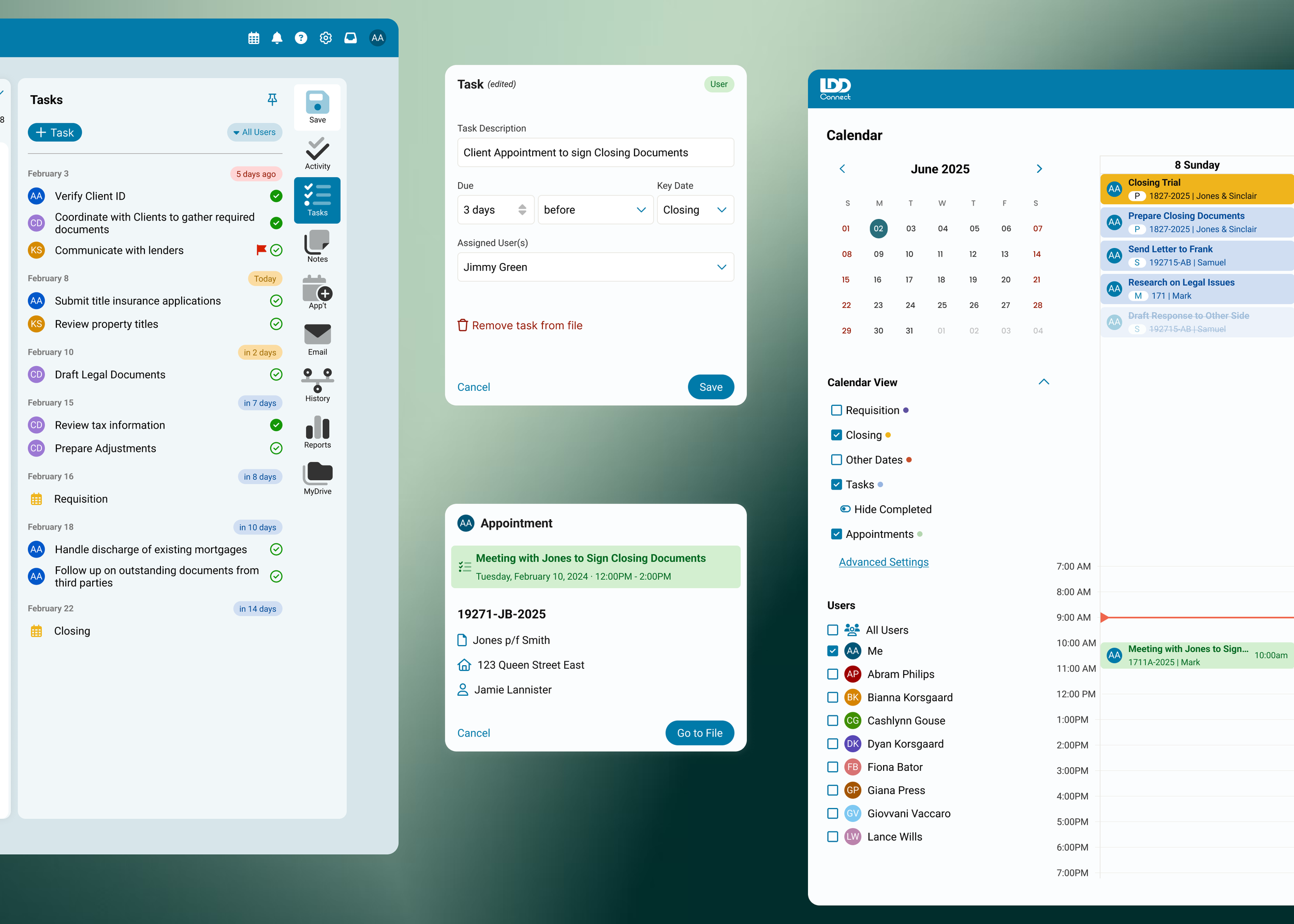
I designed a new task management feature for Realti, a SaaS application for real estate lawyers, that will allow users to create tasks, assign responsibilities, and track progress.
I collaborated across design, programming, sales, and marketing teams in order to streamline the user experience.
PROJECT RESULT
62% of respondents described the feature as “intuitive and easy to use”
69% have used the new feature at least once since launch.
MY ROLE
User Qualitative Research
End to End Design
Feature Ownership
Dev Handoff
Post-Launch Evaluation with Cross-Functional Teams
THE TEAM
1 UX Designer (Me!)
1 Design Manager
3 Developers
3 Consultants
PROBLEM
After conducting 5 focus group interviews across Canada, I uncovered that for decades, Realti users lacked a unified and collaborative approach to track tasks across their legal files.
Using different methods to manage tasks across the law firm resulted in missed tasks and deadlines, ultimately highlighting the need for a task management system within Realti.
BUSINESS OBJECTIVE
Although users utilized other platforms to track their tasks, the business ultimately wanted to create a cohesive task management system within Realti to keep users on the software during their entire workflow.
FOCUS AREAS
To minimize users’ learning curve and ensure high adoption, I designed the system around two key principles:

01 Enabling Task Automation
The types of tasks per real estate transaction can be repetitive. Reducing the amount of times tasks needed to be written and assigned across the firm would make it easy for our users to set up and promote a high adoption rate.
02 Improve File Progress Visibility
Allowing all users across the legal firm to view the progress of each file would increase accountability and communication, but also lower their learning curve as there would be multiple points of entry.
PROCESS & CHALLENGES
UX Research
I conducted both primary and secondary research, seeking understanding of current apps used by lawyers to track their tasks, and how we can use common design patterns and mental models to find the best solution.
I also conducted exploratory interviews and observation sessions with three consultants who had previous legal experience to identify pain points and opportunities.
Task Pane Exploration
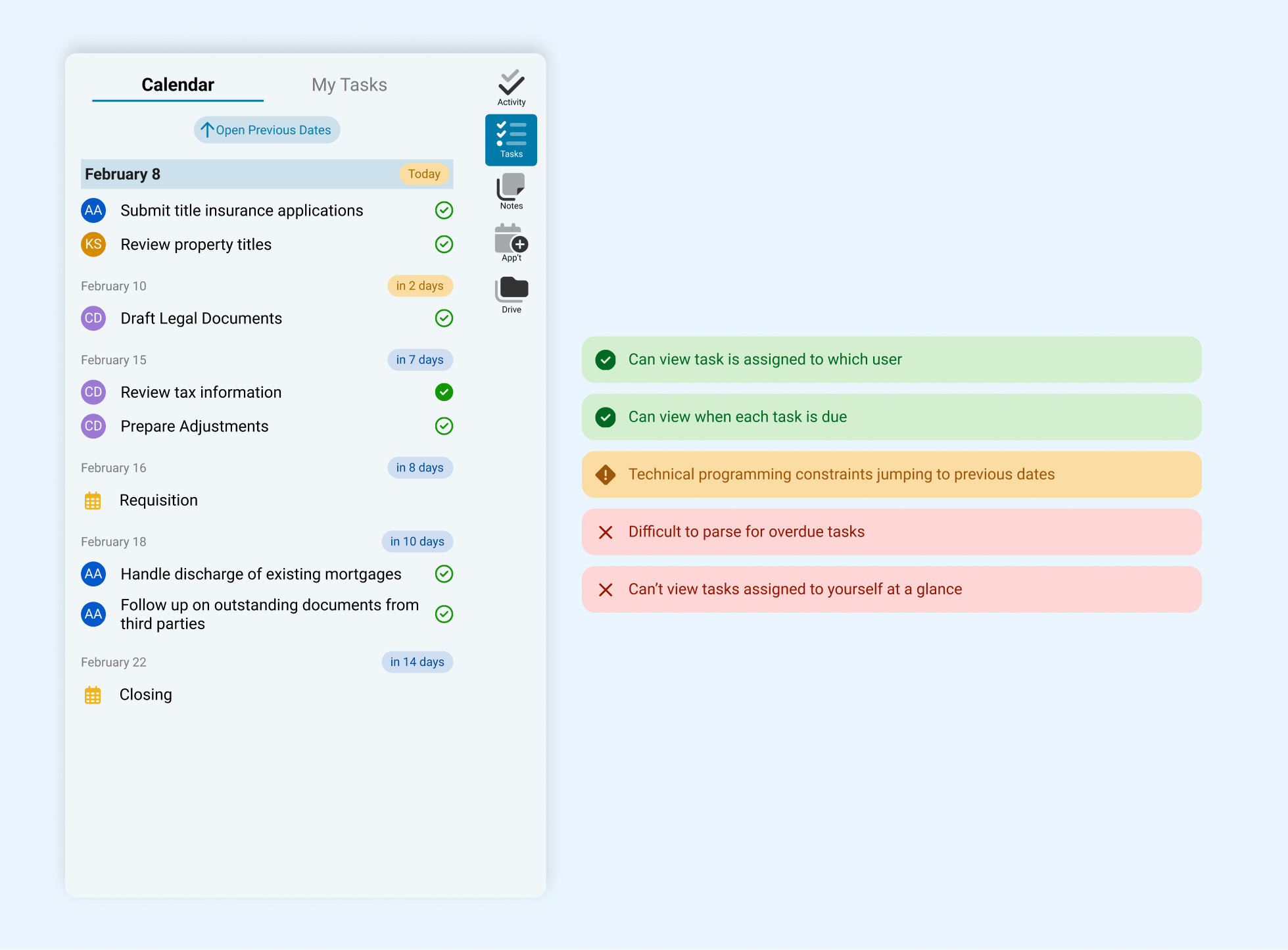
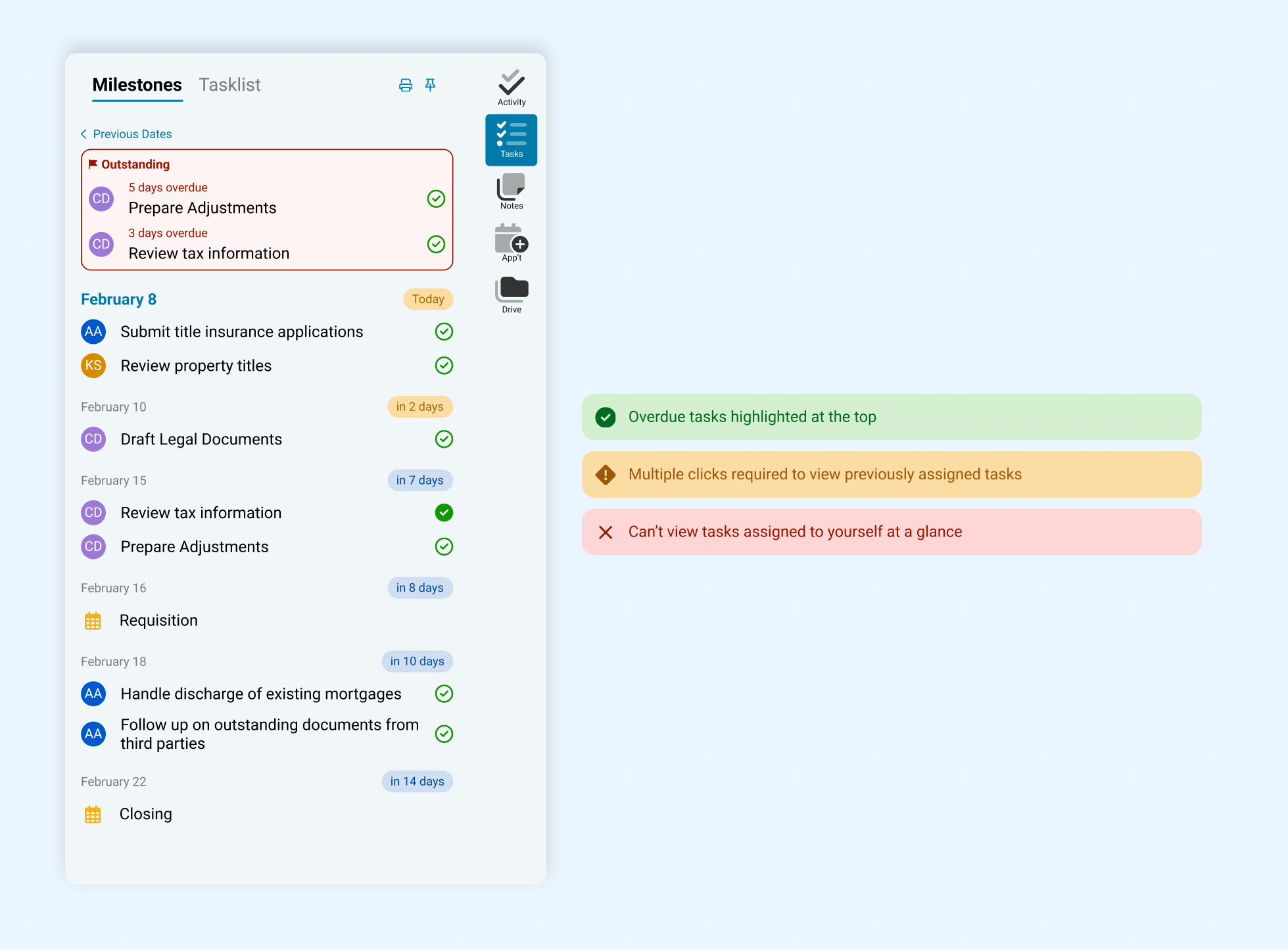
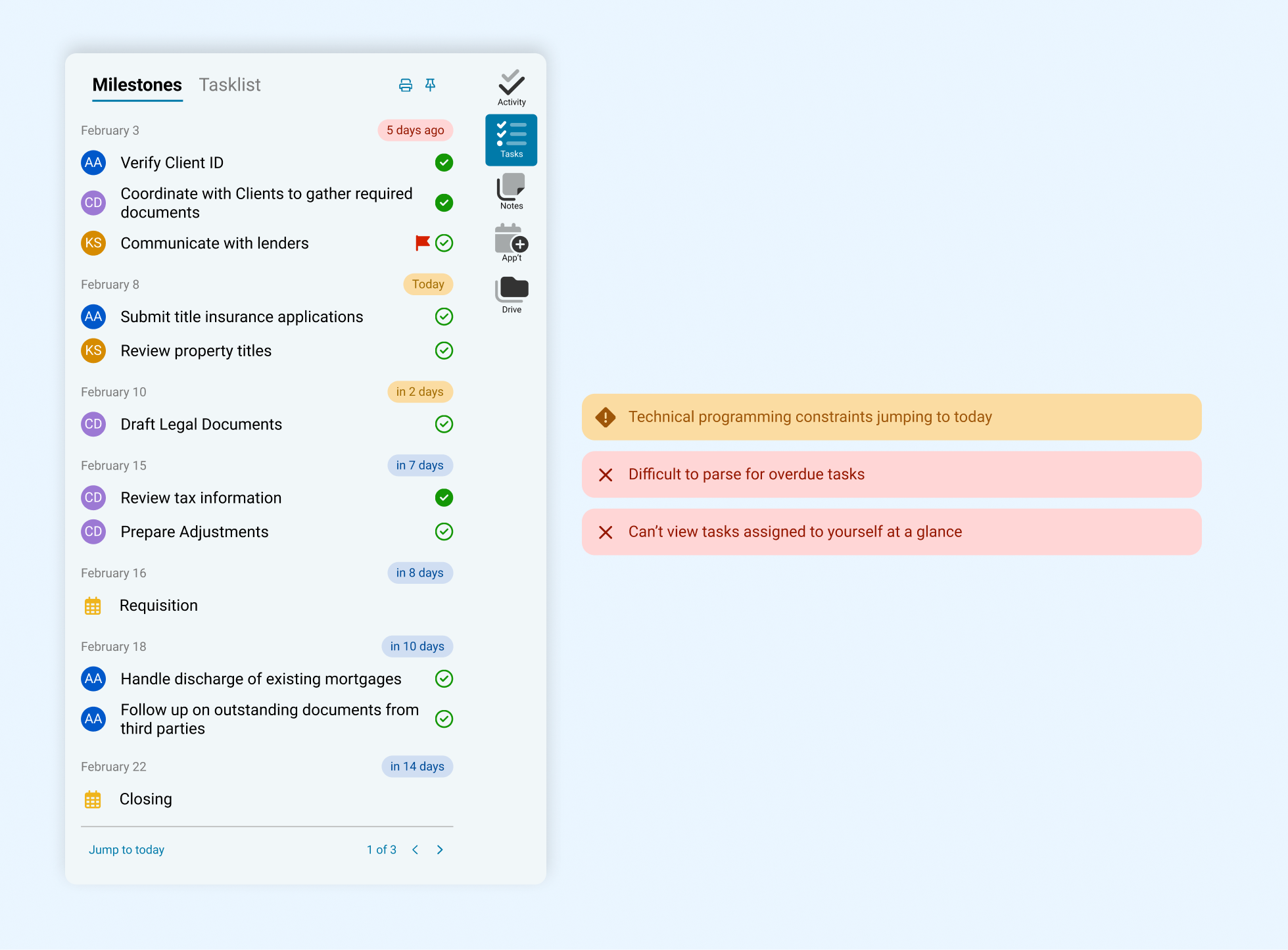
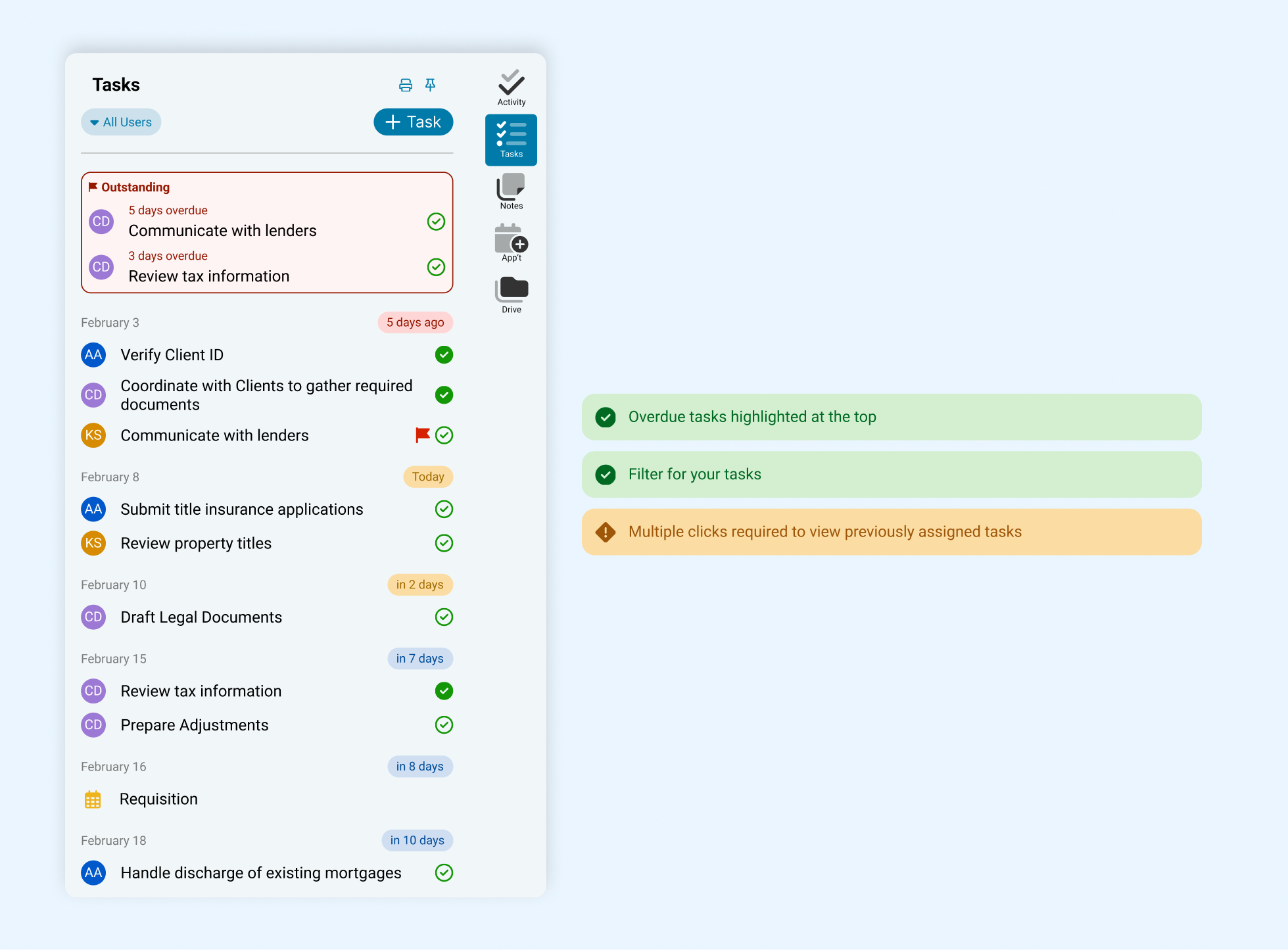
I explored different ways of how to display the task pane within each file. The design would need to show:
which user is assigned to which task
when each task is due
urgency of overdue tasks
Calendar Exploration
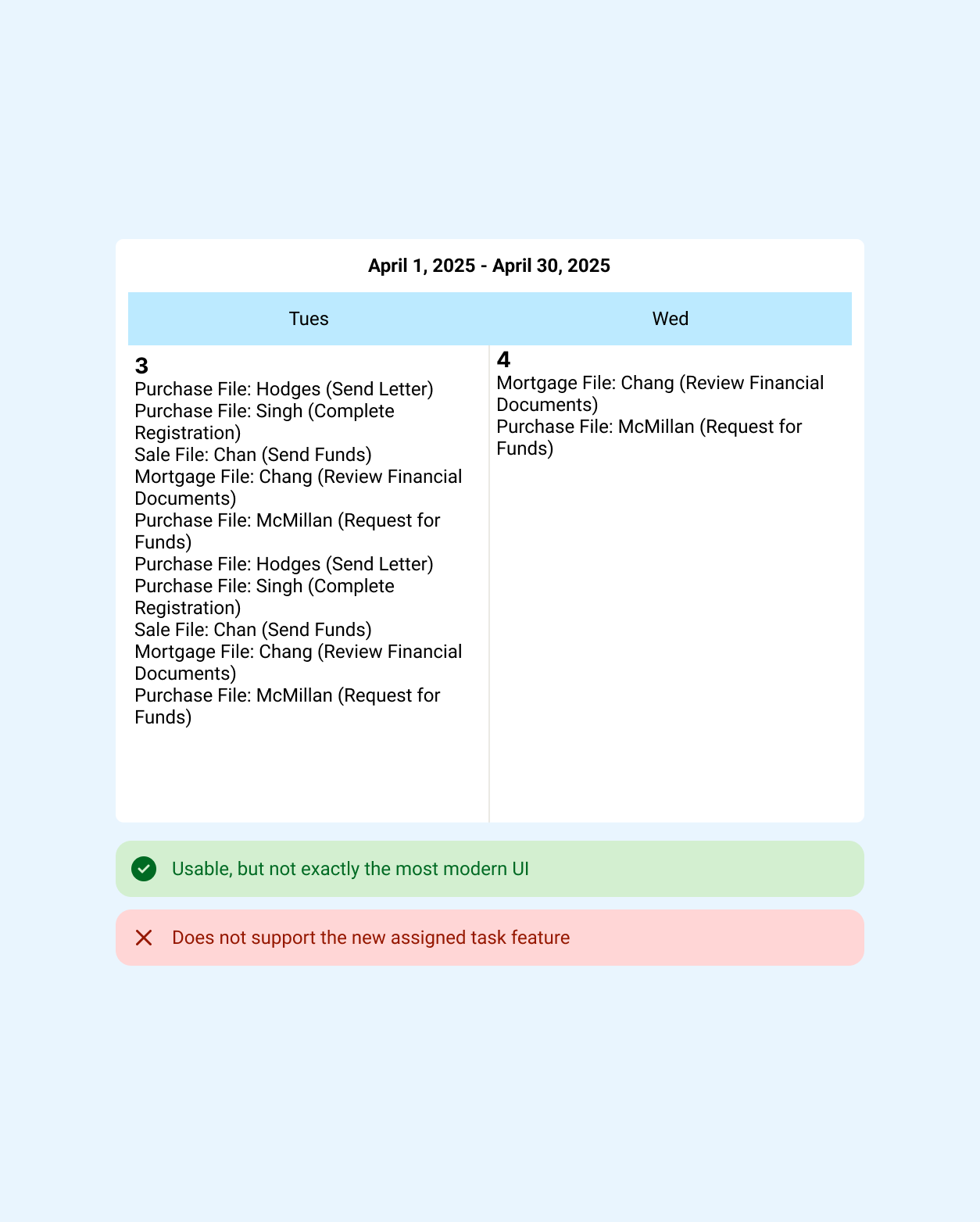
I looked at common applications used by both legal professionals and the general public to ensure the calendar design would match the mental models of our users.
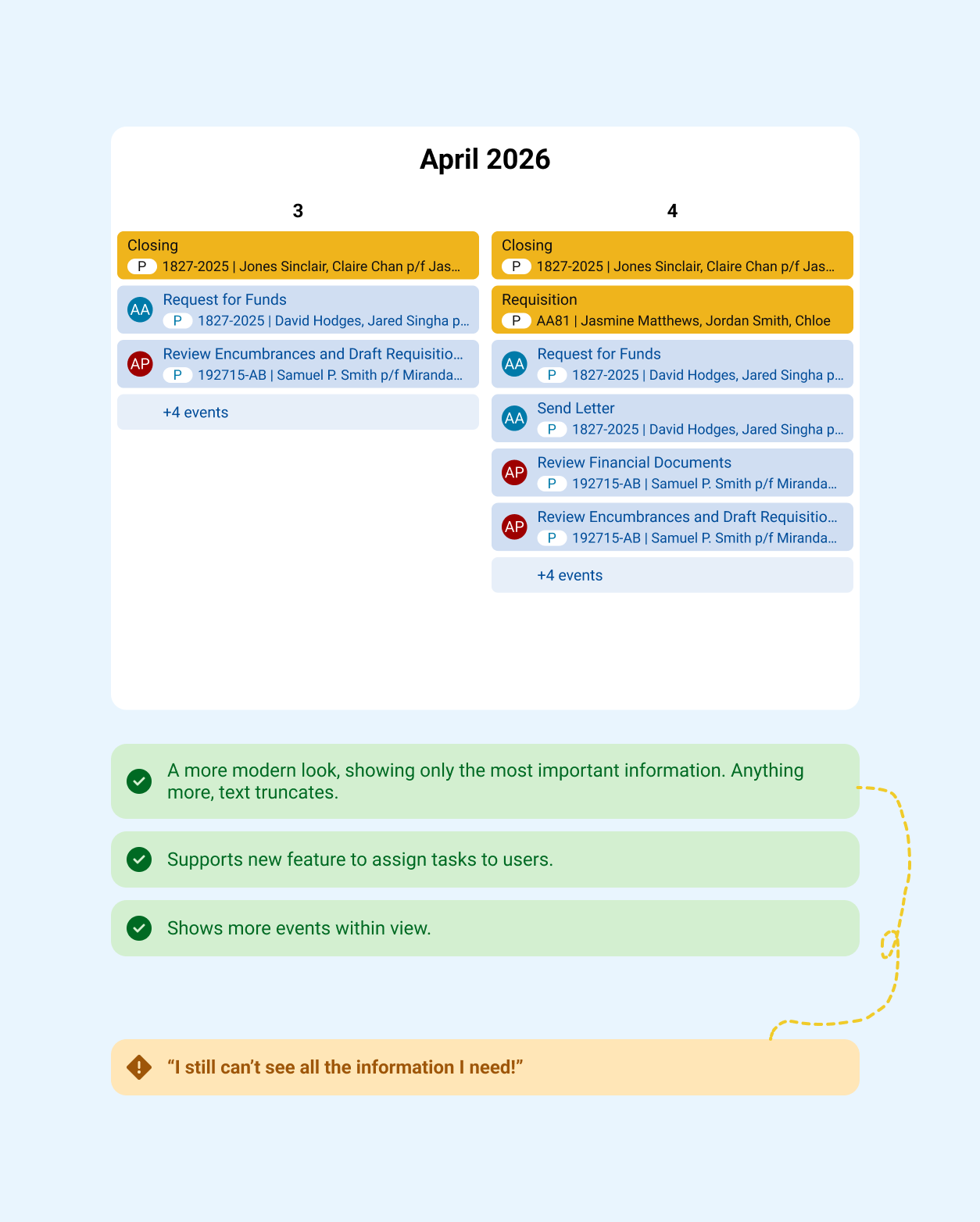
I had initially designed the calendar under the assumption that minimal text, but showing as many events as possible would be the optimal view for users.
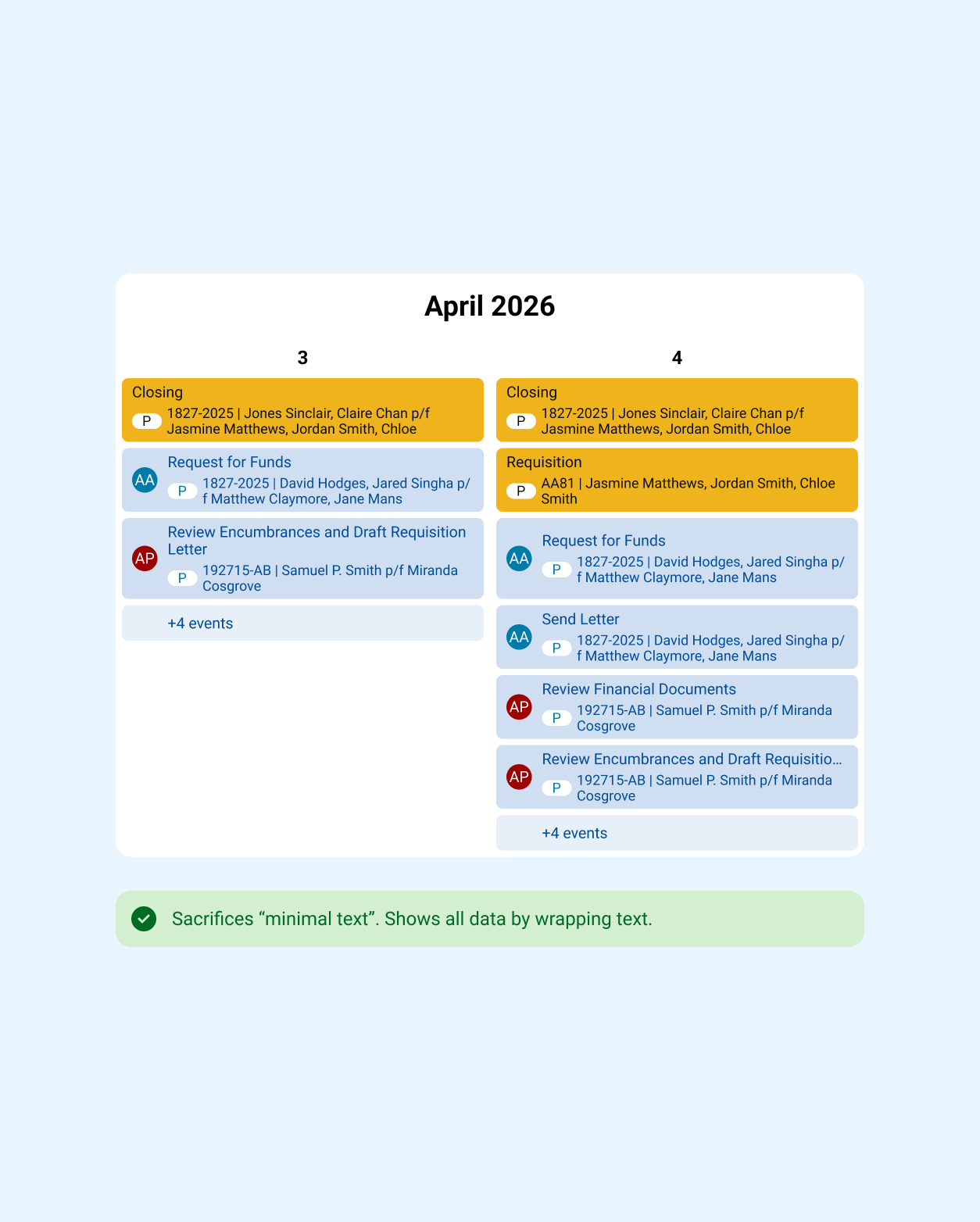
Through ongoing discussions with clients post launch, we learned that users prioritized visibility over visual simplicity even if it resulted in a denser layout.
We eventually decided to wrap the text inside the event. Although a simple solution, since the enhancement, we are no longer receiving any calls to the support team about this issue
FINAL DESIGN
01 Enabling Task Automation
Using our existing design system, I designed an interface allowing administrators to create templates where tasks could be set up once and automated to show across all future files. This would streamline the process of assigning tasks in the future, and reduce missed deadlines. Doing it once will help maintain a low learning curve for our users.
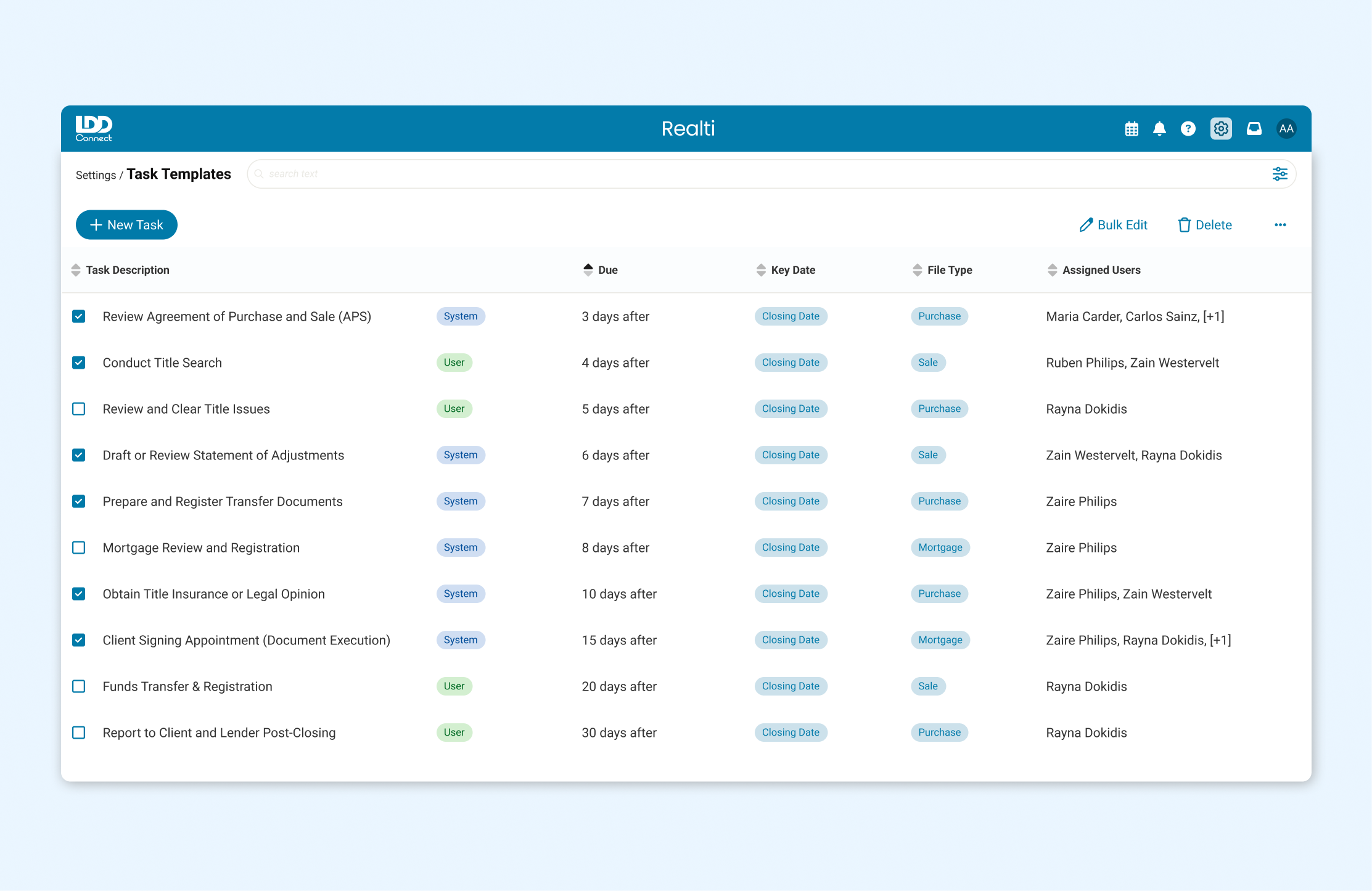
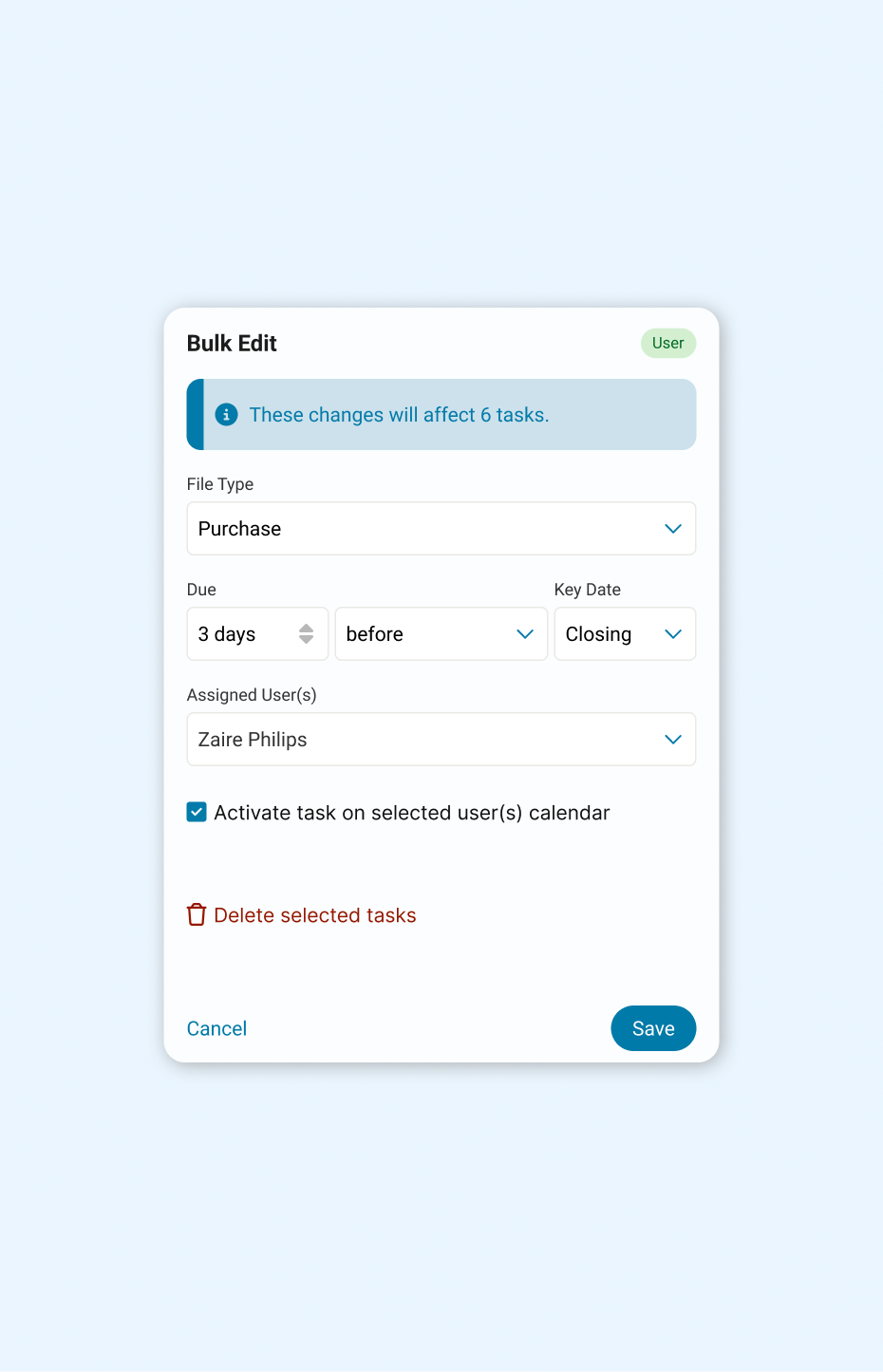
Firm administrators would be able to set up templates for recurring tasks, creating a condition of when each task is due per file.
02 Improve File Progress Visibility
Within various parts of the Realti software, I designed centralized views for all users in the firm to track task completion across various files.
This would provide a quick and high-level overview, allowing all users in the firm to be aware of each file’s progress and reduce the opportunity for missing tasks and deadlines.
To facilitate a view where users can view the task deadlines beyond individual files, I designed a modernized calendar to help improve coordination and deadline transparency.
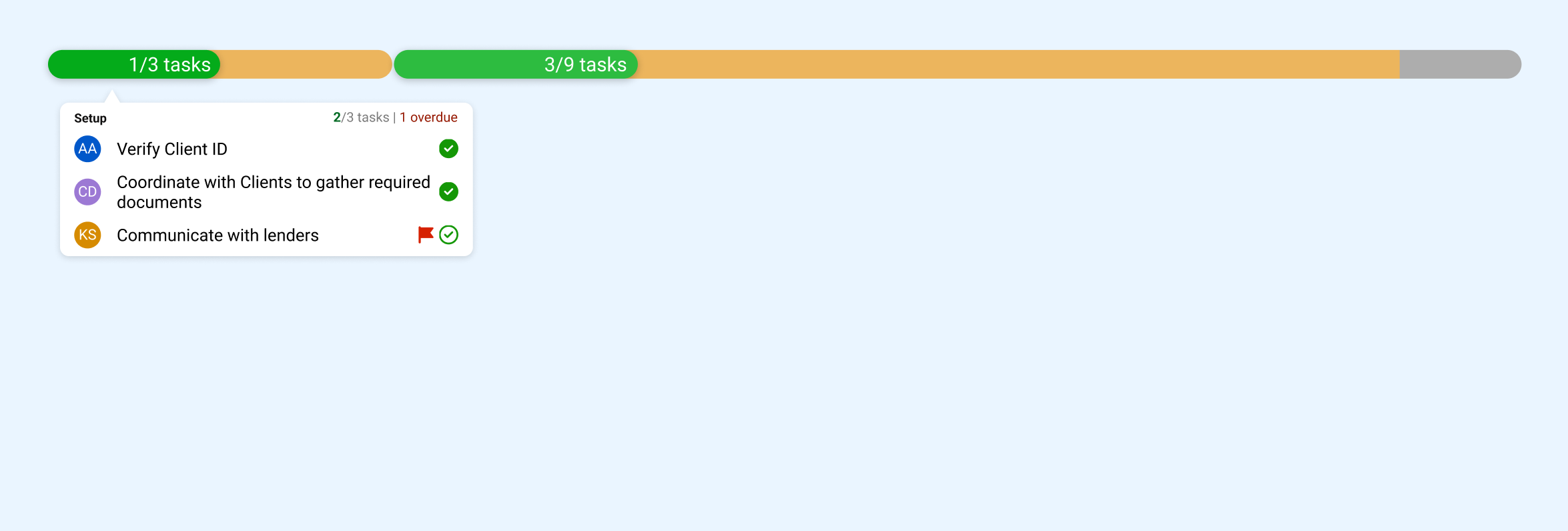
A progress bar spanning across each file visually representing the file’s progress.
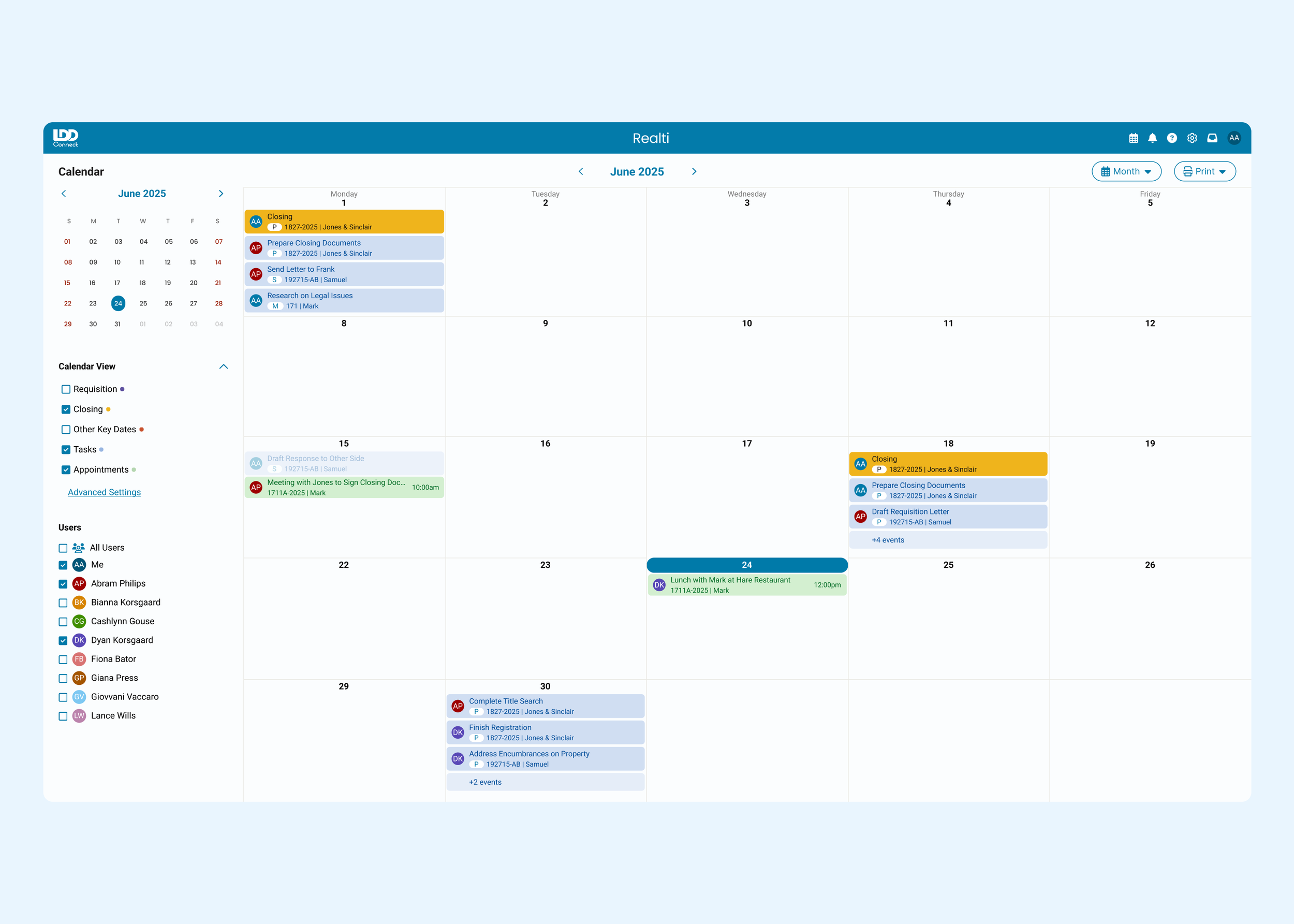
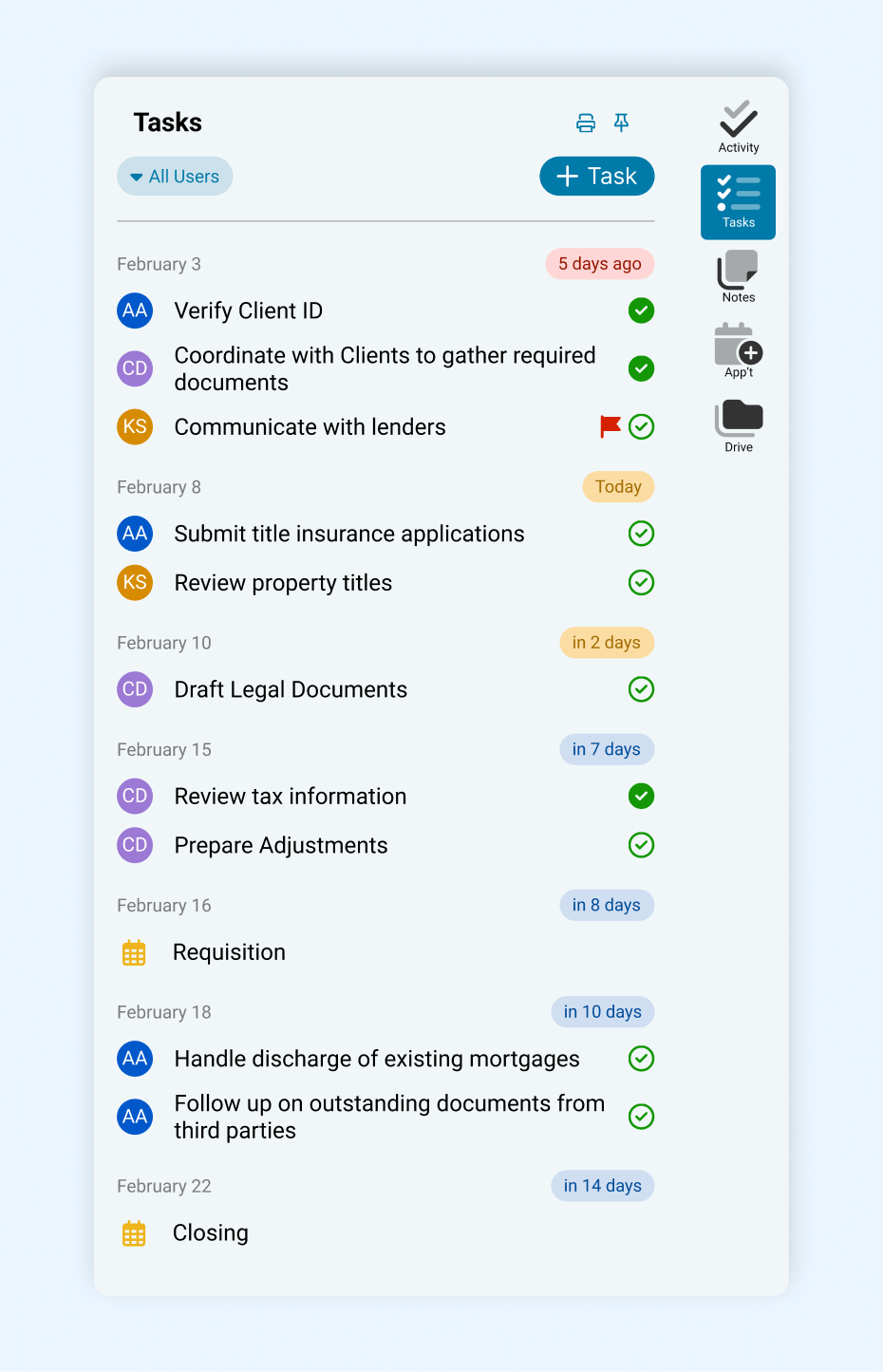
A task pane, working alongside the progress bar, allowing users to check off each task once complete and a calendar displaying everyone’s task across the firm.
RESULT
I guided our intern in creating a survey gathering over 70 responses about the new task management system. 62% of users indicated the system was intuitive and user friendly, and 69% have used it at least once.
These positive results indicate a strong user adoption rate to help lawyers track their tasks in a more streamlined manner.
I continue to oversee the product backlog for the task management feature. I organize biweekly meetings with the head of development, my design lead, and consultant to decide on the next best set of enhancements we can roll out to continue improving on this product.