2024
Managing and transitioning user accounts
Systems Thinking, User Research, Information Architecture, Legacy Systems, Stakeholder Alignment
PROJECT SUMMARY
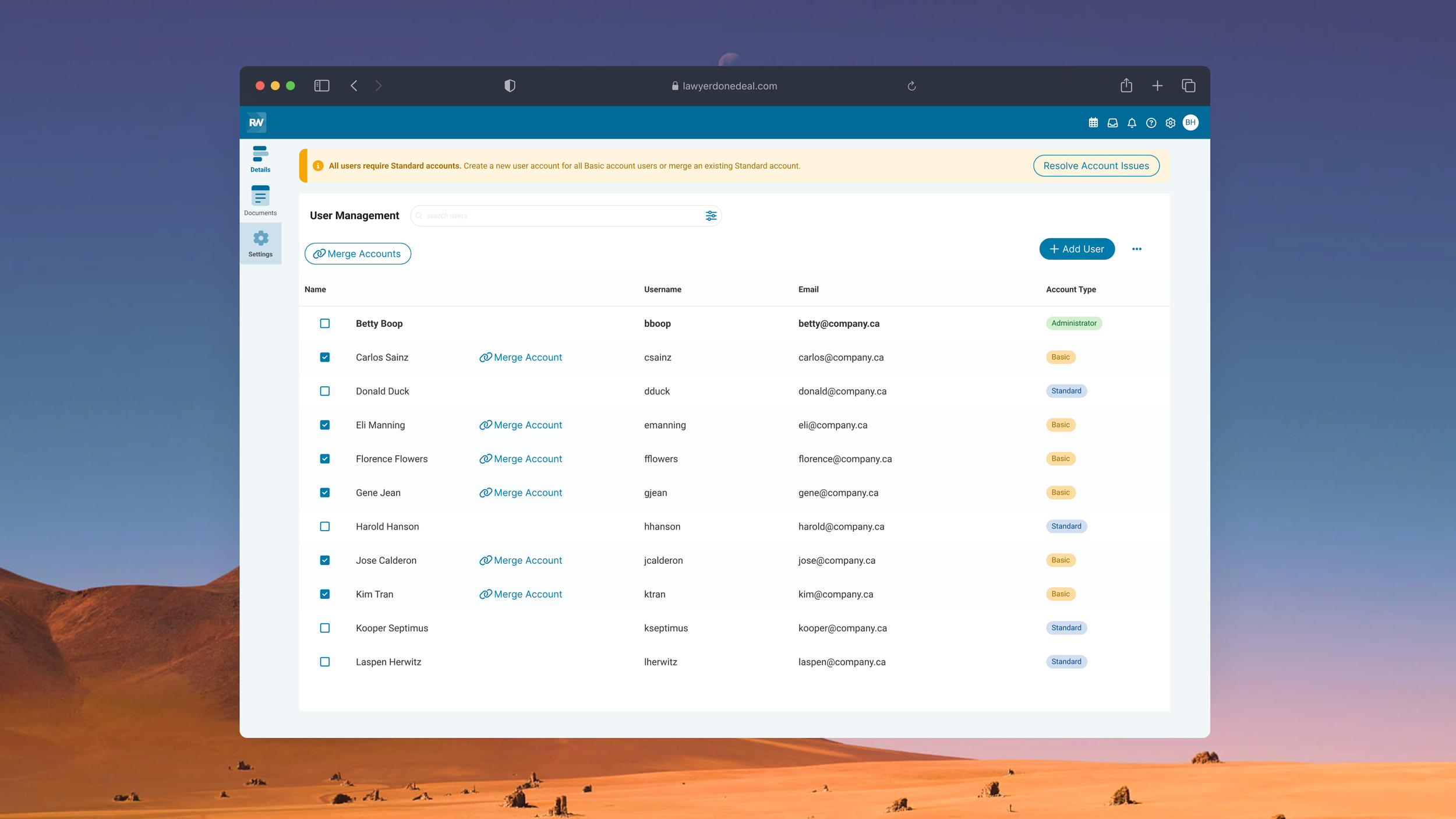
I designed a workflow allowing Administrators to transfer users with Basic accounts to Standard accounts for Realti, a SaaS application for real estate lawyers.
PROJECT RESULT
We launched this feature in Q4 of 2024, allowing administrators to make changes to accounts prior to key feature releases in 2025 like AI and task assignments.
MY ROLE
Conceptualization
Design
Collaboration with developers
THE TEAM
1 UX Designer (Me!)
1 Design Manager
1 Developer
1 Business Analyst
BACKGROUND & PROBLEM
Realti, a SaaS application for Canadian real estate lawyers, allows multiple people from one law firm to log in from one account - we’ll call this a Standard account. However, every time someone logs in, they type their own name to distinguish themselves - we’ll call this a Basic account.
The software backend saves information from this Basic account within a separate database. As a result, there can be duplicates - users can have both a Standard and a Basic Account.
BUSINESS OBJECTIVE
Realti has been slowly introducing more modernized tools and capabilities, features only available to users who have a Standard account. To allow more users to benefit from these features, the business requires all users to have a Standard account.
PROJECT GOAL & OBJECTIVES
Allow administrators to oversee the transition process of Basic to Standard accounts while minimizing data loss and day-to-day workflow disruption.

01 Reduce Monotomy
Ensure administrators have an easy time transitioning Basic to Standard accounts - especially relevant for law firms with many accounts.
02 Preserve Data
Minimize data loss and ensure administrators understand what information gets transferred from one account to another
03 Minimize Disruption
Users log into Realti to complete very specific workflows. I would need to ensure the design does not interfere with day-to-day work.
PRELIMINARY IDEATION
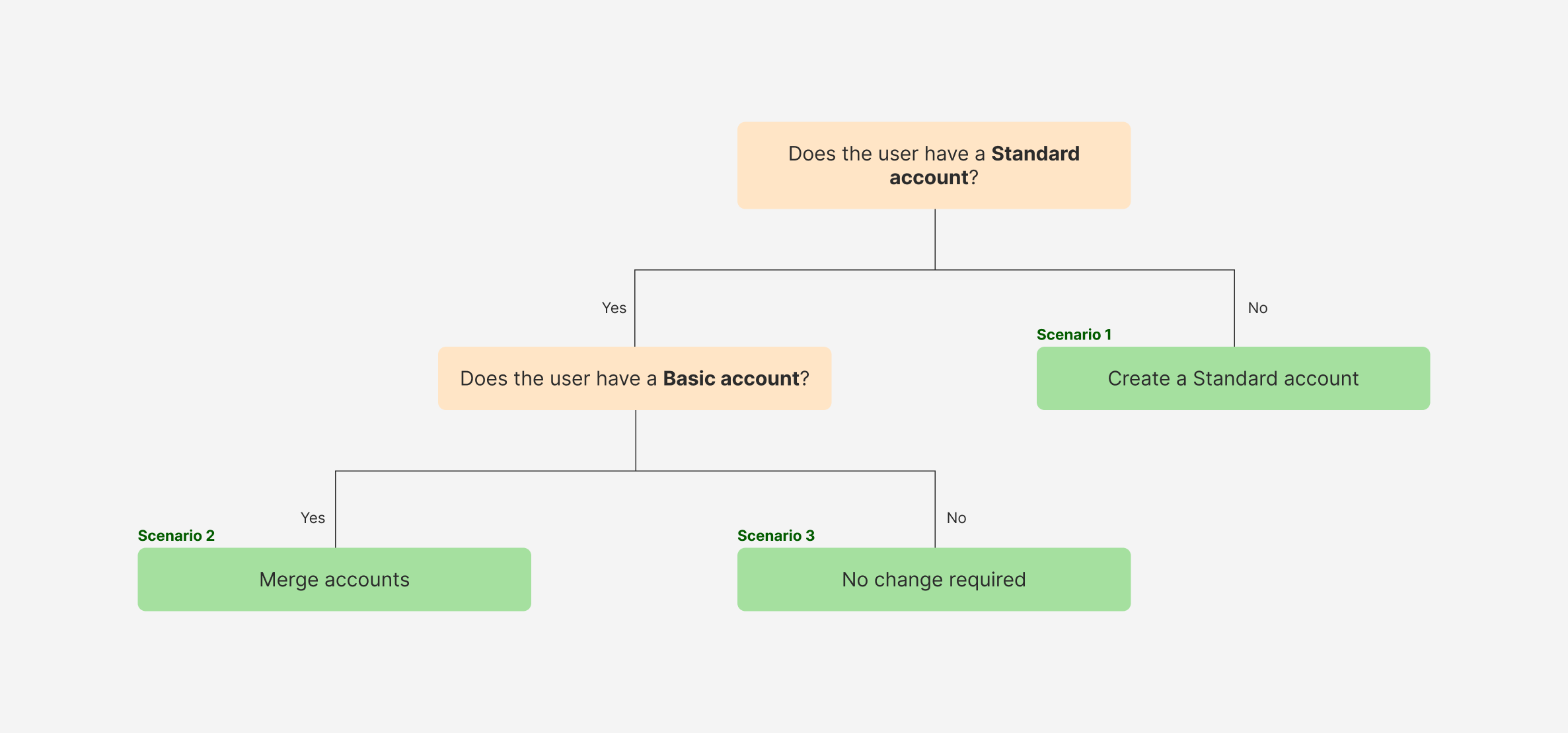
There were three different scenarios the design would need to account for:
Users with a Basic account and no Standard account.
Users with both a Standard account and a Basic account.
Users with a Standard account and no Basic account.
THE PROCESS
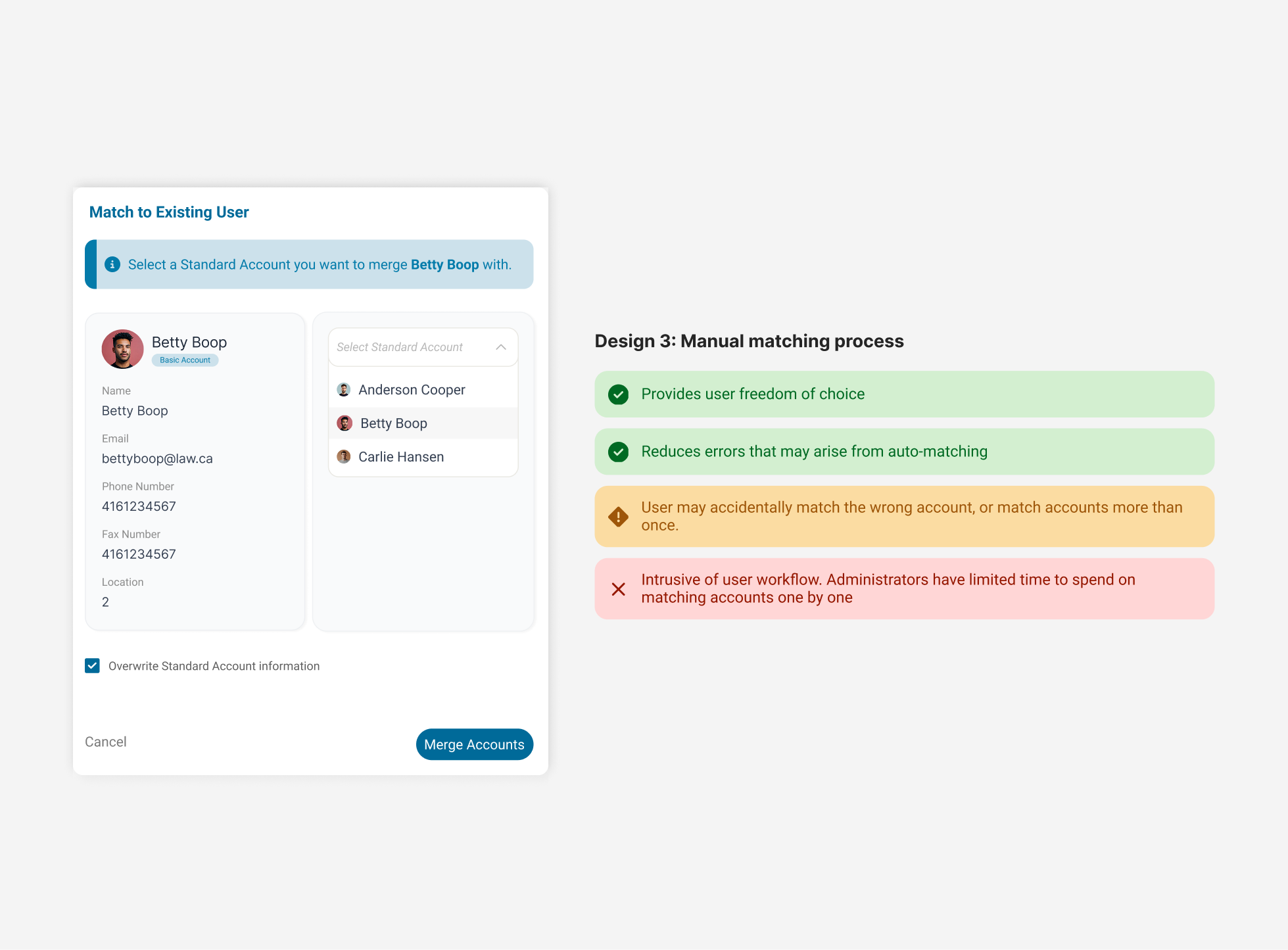
I looked at various ways on how to design a workflow that would account for all three scenarios.
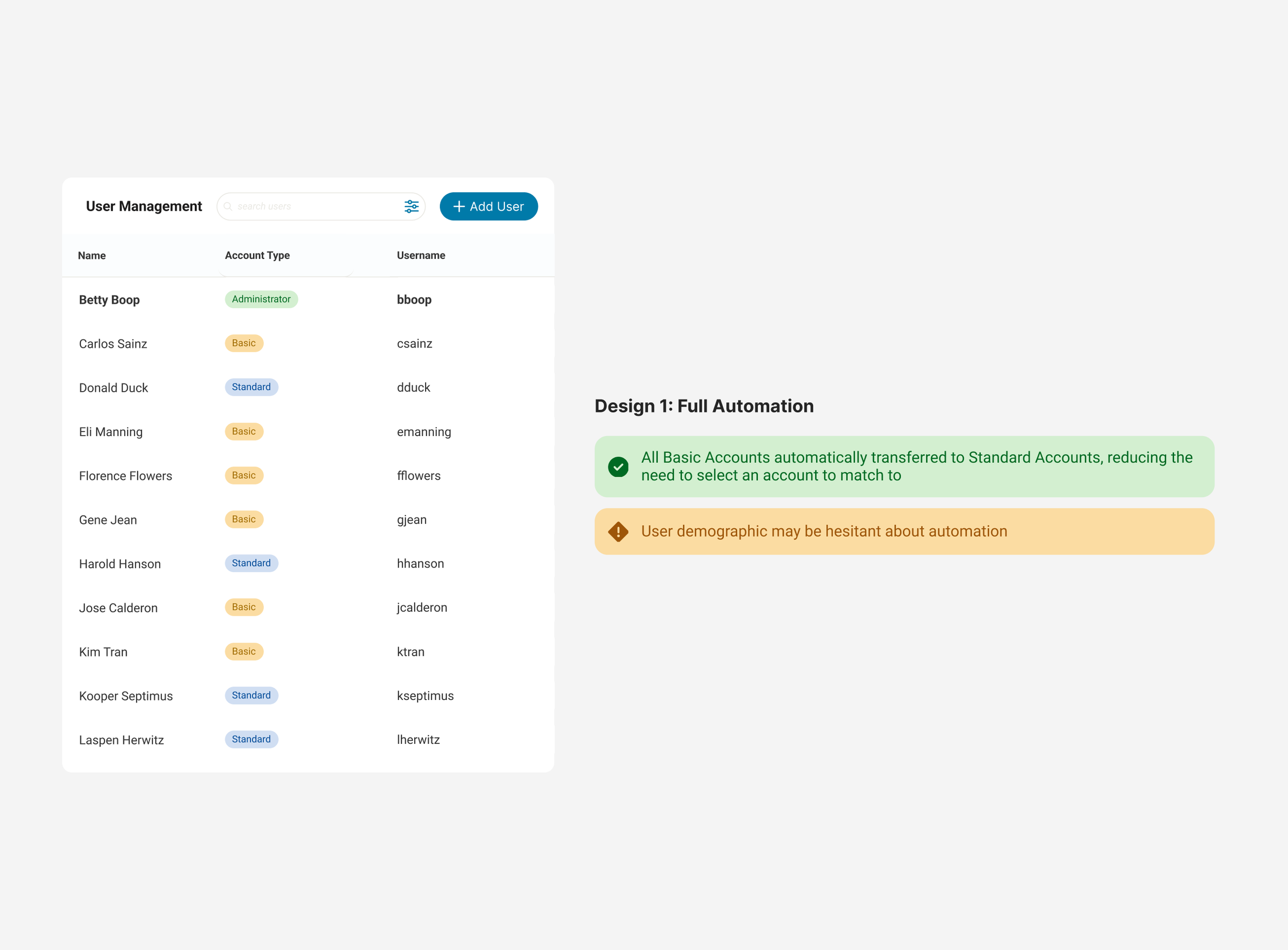
I understood that designing a more autonomous account transition process would reduce the tediousness of transferring one account at a time. However, I had to finely balance this with the hesitancy of our users.
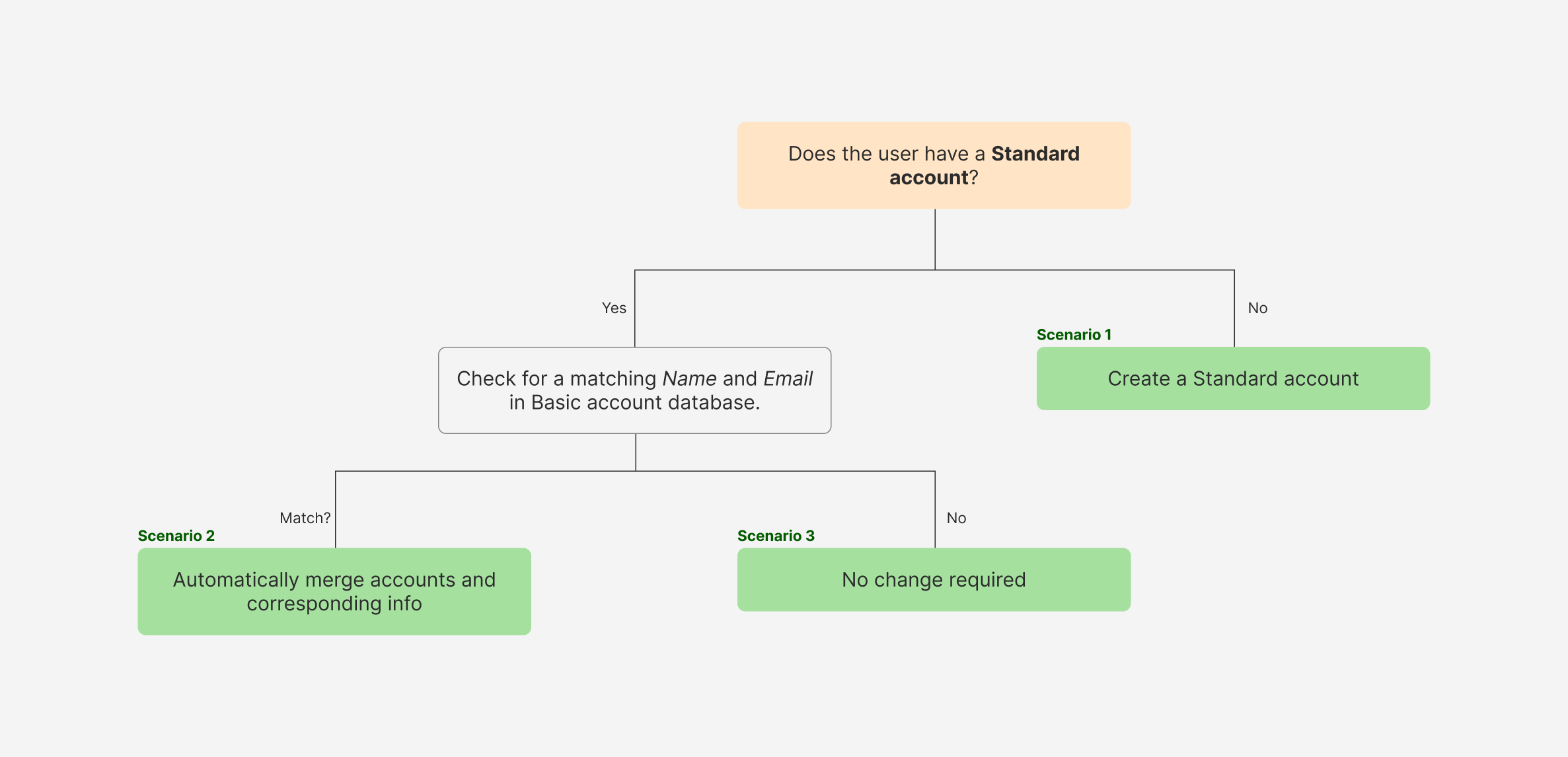
Knowing that both account types save the user’s name and email address, I based my designs on an auto-matching process:
Backend check for matching name and email address
If a match was found, we would need to create a workflow to transition the Basic account to a Standard account
If no match was found, allow the administrator to create a Standard account for the user
FINAL DESIGN
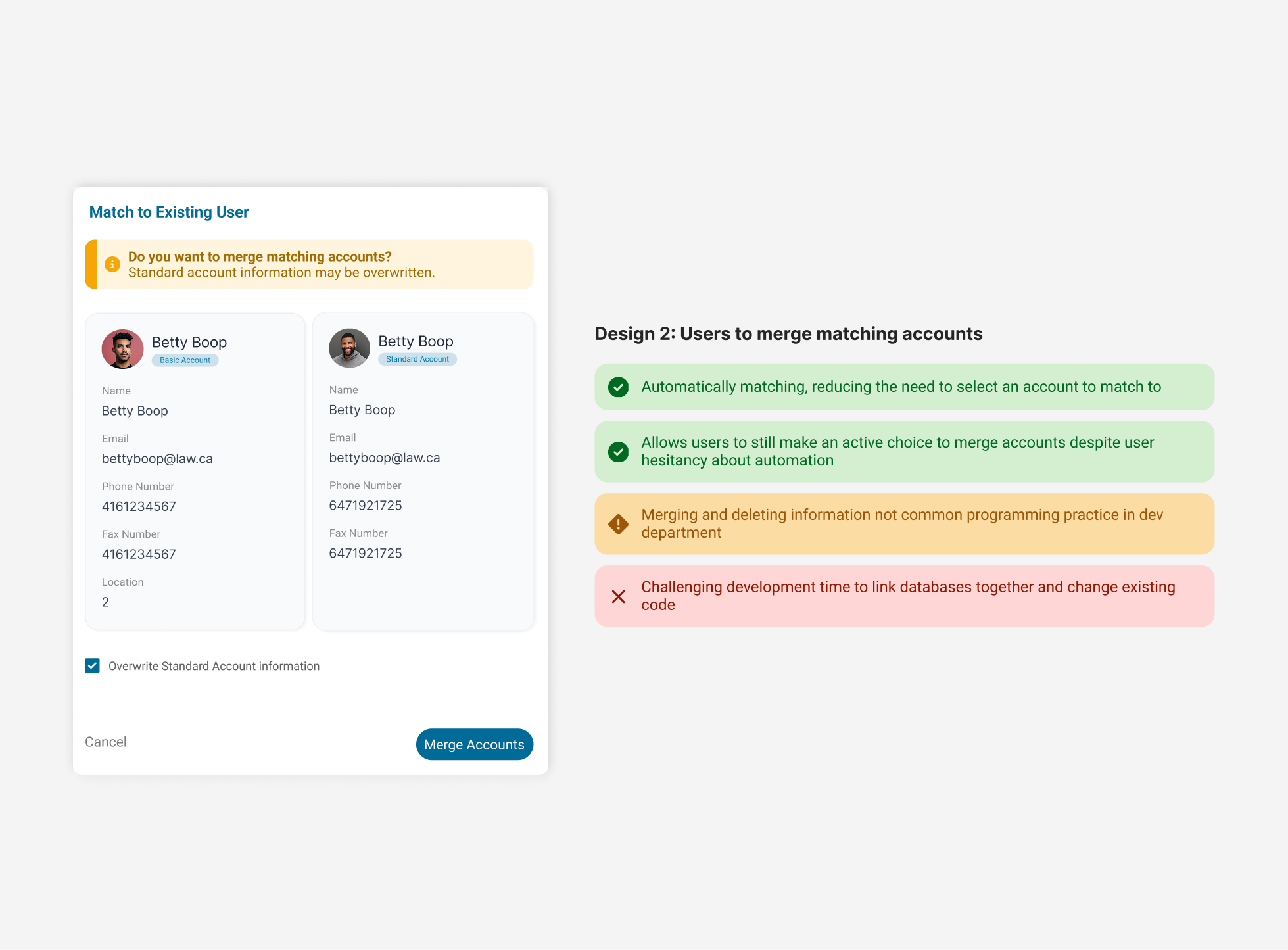
I had believed Design 2, a hybrid approach would be best to tackle this problem of allowing administrators to quickly transition Basic accounts to Standard accounts.
By automatically matching accounts where names and emails are the same, this would reduce the time required to manually match accounts, thereby saving administrators time and cause less disruption to their workflow.
Unfortunately…
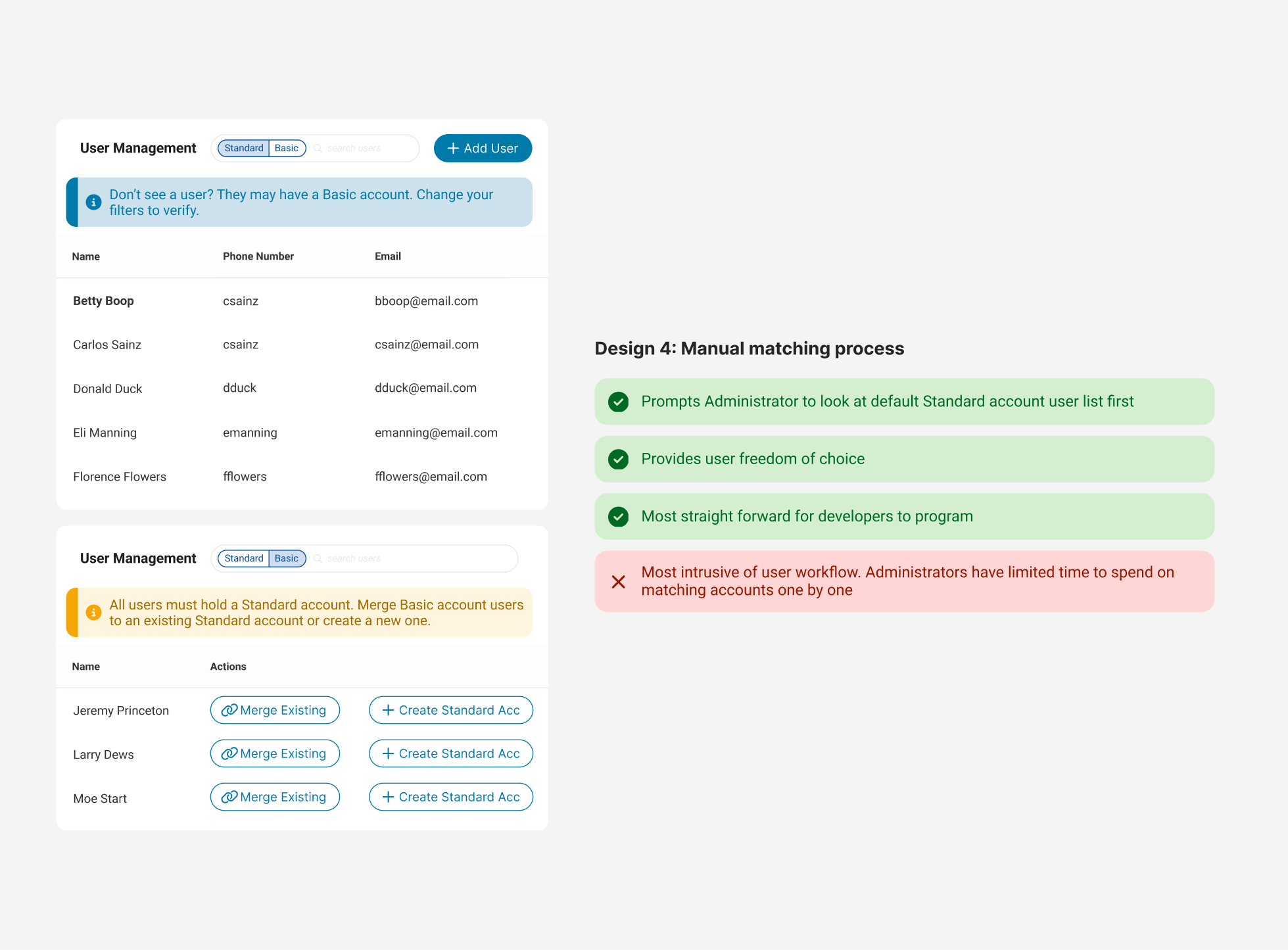
Unfortunately, this approach was not the one implemented. The programming team was unable to transfer data from one database to another. As a result, working with my design lead, we came up with a design that showed both Standard account holders and Basic account holders in a table. When administrators view the list of users with Basic accounts, they are prompted to either create a new Standard account for them, or select an existing account to merge with.
REFLECTIONS
This project had a lot of back and forth with the development team to fully understand the limitations of working with two separate databases. I had gone through numerous design iterations, often circling back to ideas I had first designed.
Through this experience, I learned that sometimes the best solution is about finding one method that works best given the constraints. I learned the importance of adaptability, collaboration, and managing expectations in both design and development.